Neuropeptides in Cognitive Research: Semax and Selank
An introduction to two synthetic neuropeptides studied for their signaling effects.
Cognitive and neuro research has long been interested in short peptides that influence signaling in the nervous system. Two synthetic neuropeptides appear frequently in this literature: Semax and Selank. Both are analogs — synthetic molecules modeled on naturally occurring sequences — and both are studied for their effects on neurochemical signaling.
Semax
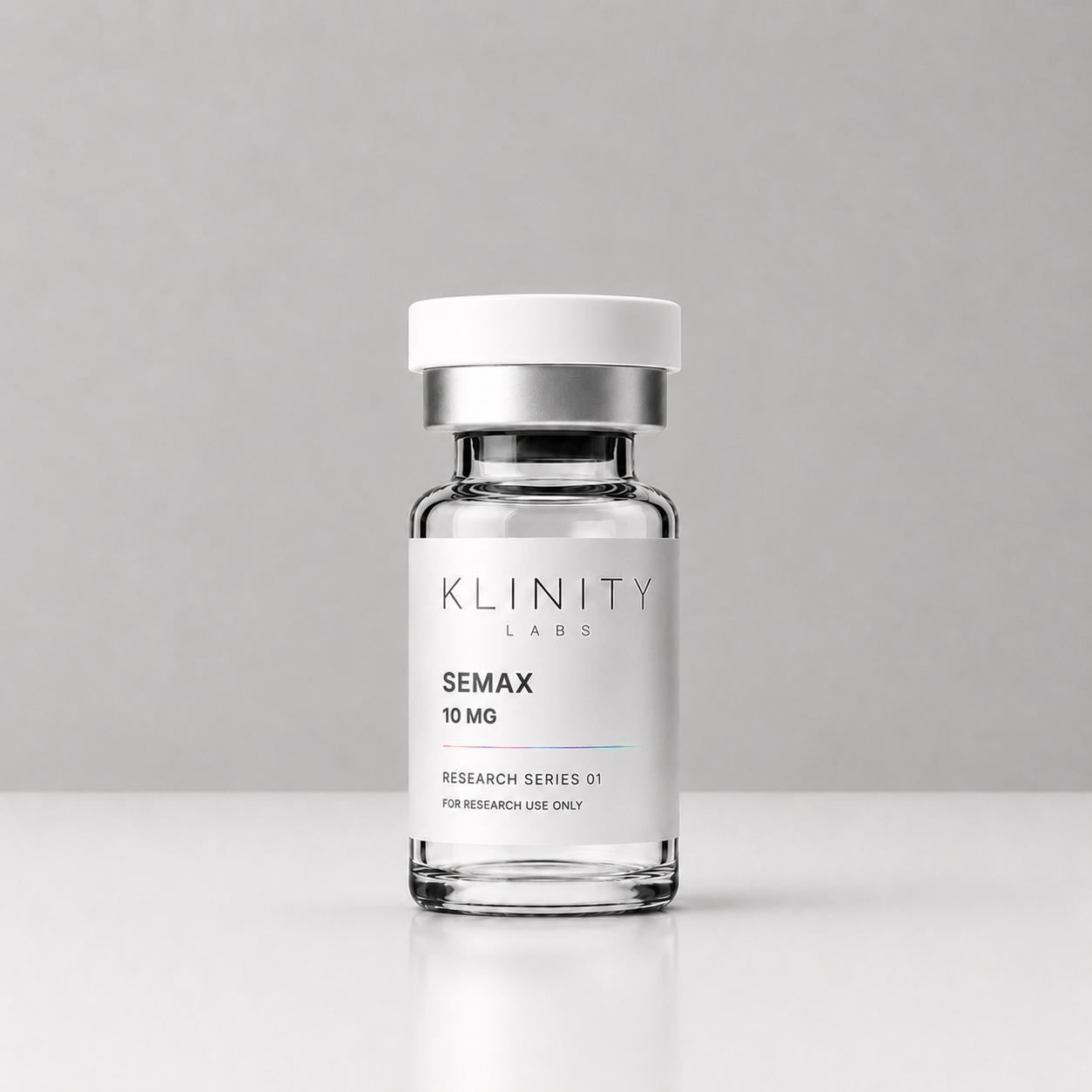
Semax is a heptapeptide analog derived from a fragment of adrenocorticotropic hormone, or ACTH. In the research literature it is examined for its relationship to brain-derived neurotrophic factor, a protein involved in the growth and maintenance of neurons. The neurotrophic-signaling angle is what places Semax in cognitive-research discussions.
Selank
Selank is a synthetic analog of tuftsin, an endogenous immunomodulatory peptide. It is studied for its influence on GABA and serotonin pathway signaling, as well as for immunomodulatory properties. Its anxiolytic-pathway research context is distinct from Semax's neurotrophic focus, which is why the two are often discussed together as complementary research subjects.
A Note on Interpretation
As with every compound in this journal, the descriptions here summarize what is studied in laboratory research, not established applied effects. These materials are supplied for in-vitro research use by qualified professionals only.
This article is educational and informational only. It does not constitute guidance for the use of any compound. All Klinity Labs compounds are supplied for laboratory research use only.